'RADICAL POWER'
Patron/ise
- Exhibition
- Patron/iseCollective exhibition
- Location
- LOTTOZERO, Prato
- Curated by
- Ester Maria D’Avossa
- Materials
- TrampolineMetal wiresStickersIronAluminiumCushions
- Media
- Horizontal video documentation
//DESCRIPTION
'Radical Power' emerged as the formal outcome of a residency period at LOTTOZERO in Prato. The project also gave rise to a sound and reading performance developed in collaboration with Muiredach O’Riain, conceived as an activation of the installation.
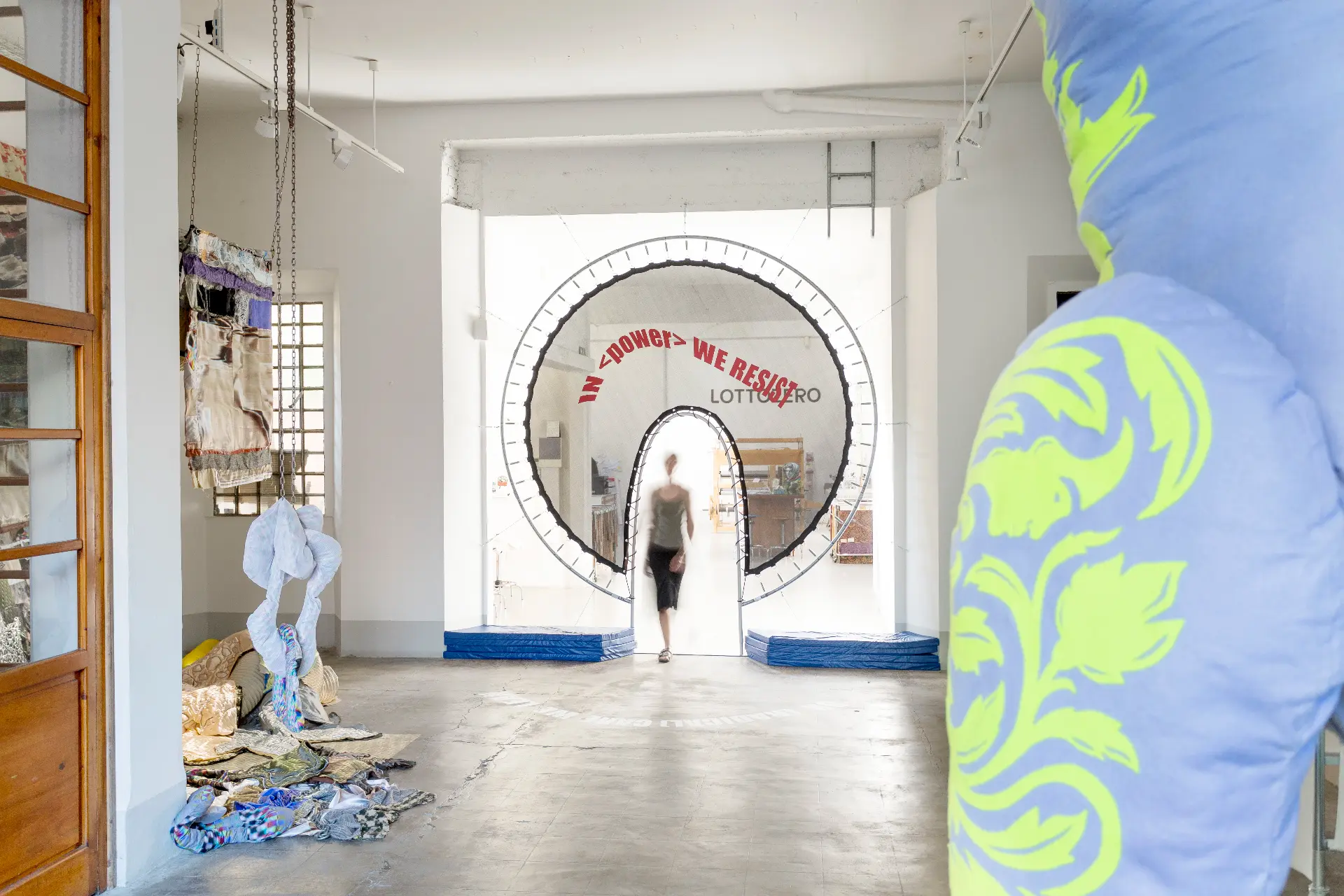
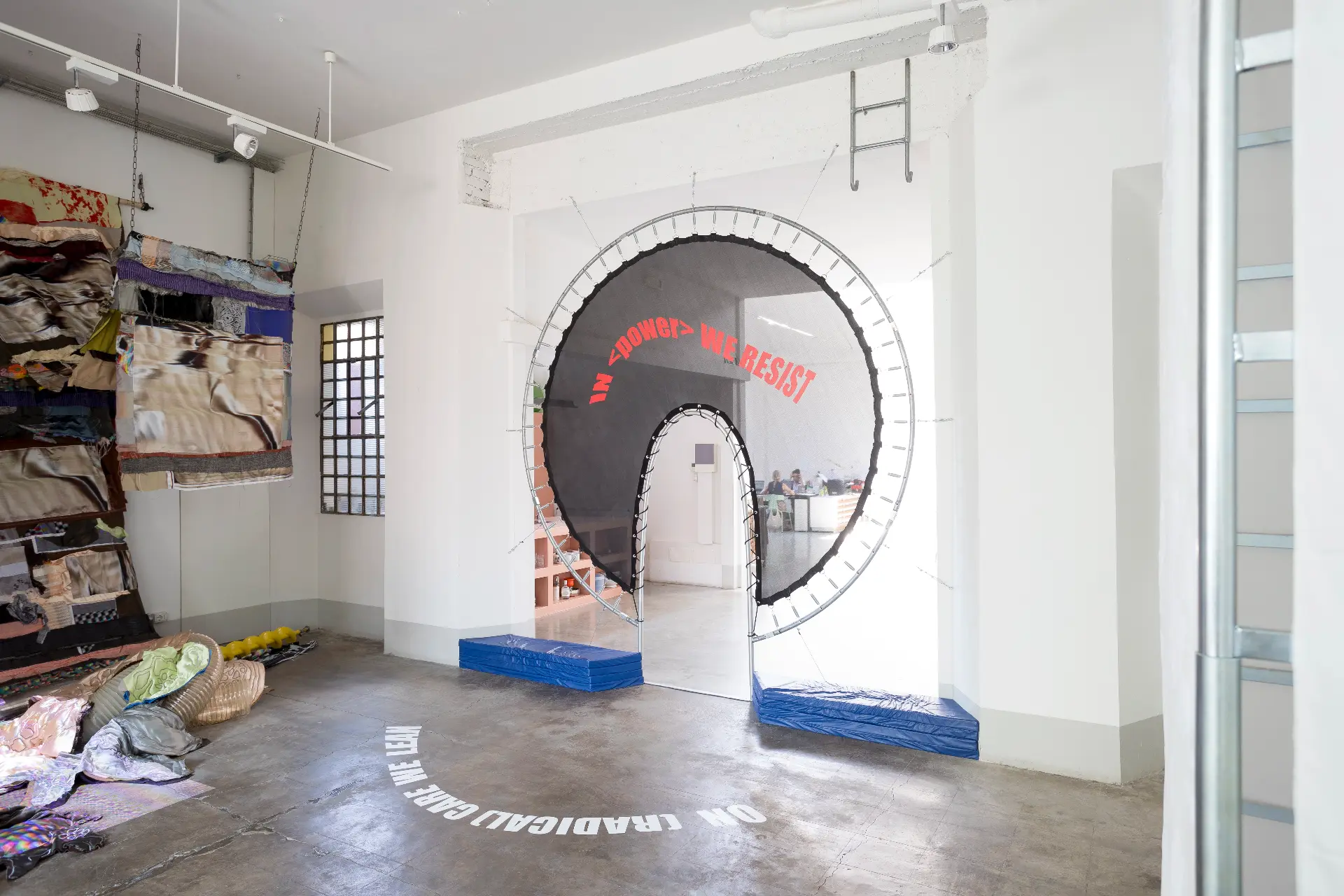
A threshold is never only a passage, and space is never truly neutral. In Radical Power, Carmen Buonanno transforms the architectural opening between LOTTOZERO’s exhibition space and its more domestic, inhabited areas into a charged site of crossing.
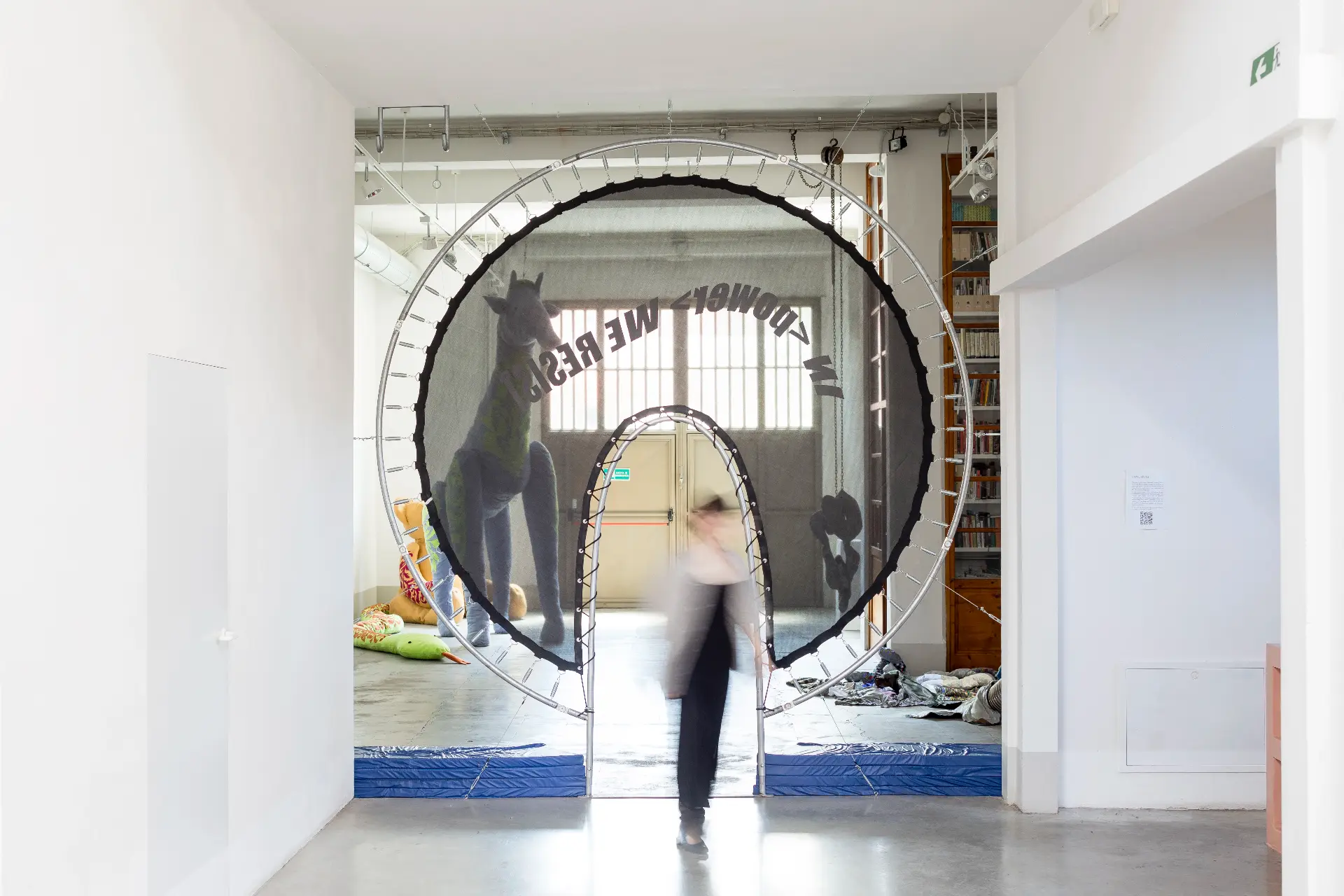
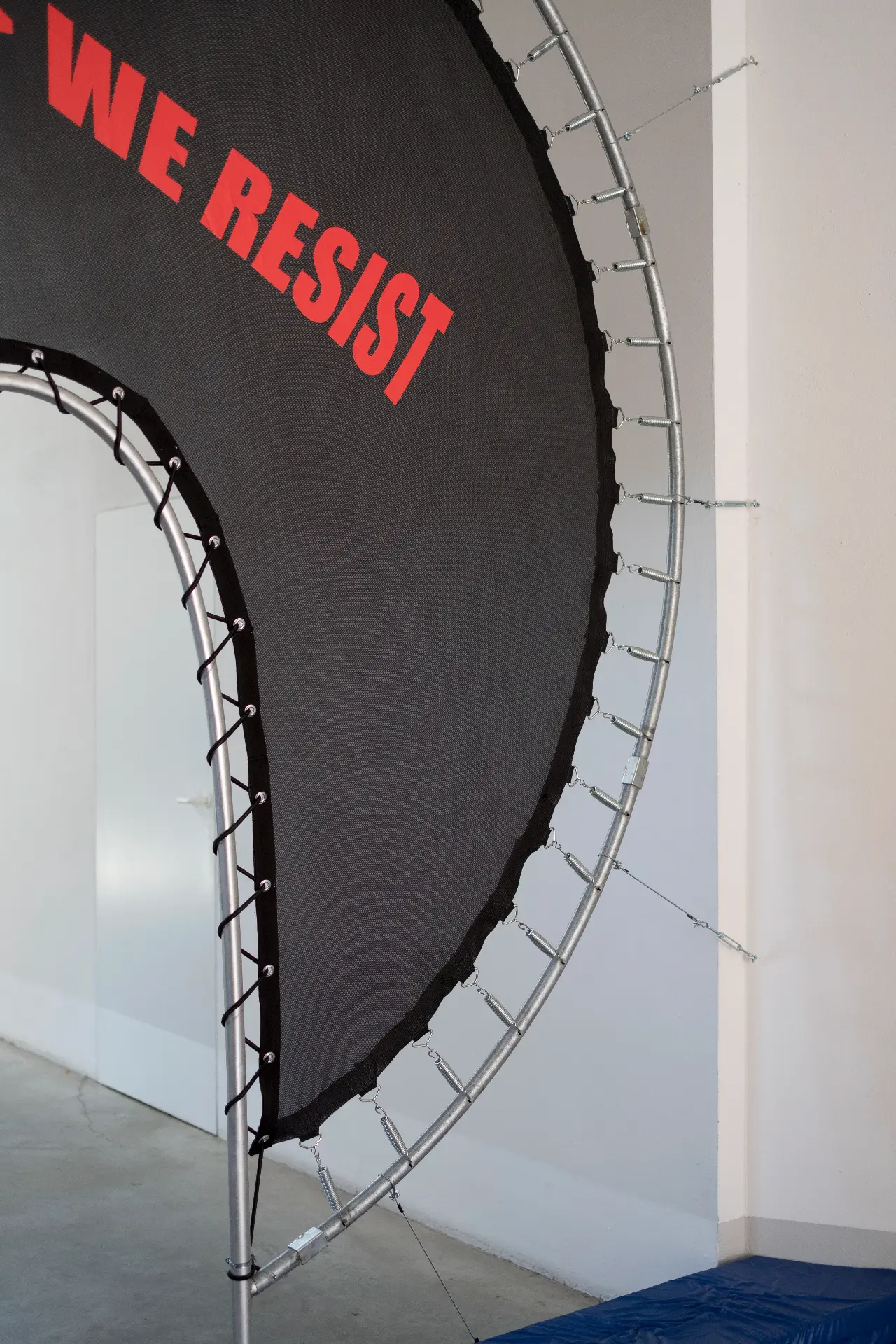
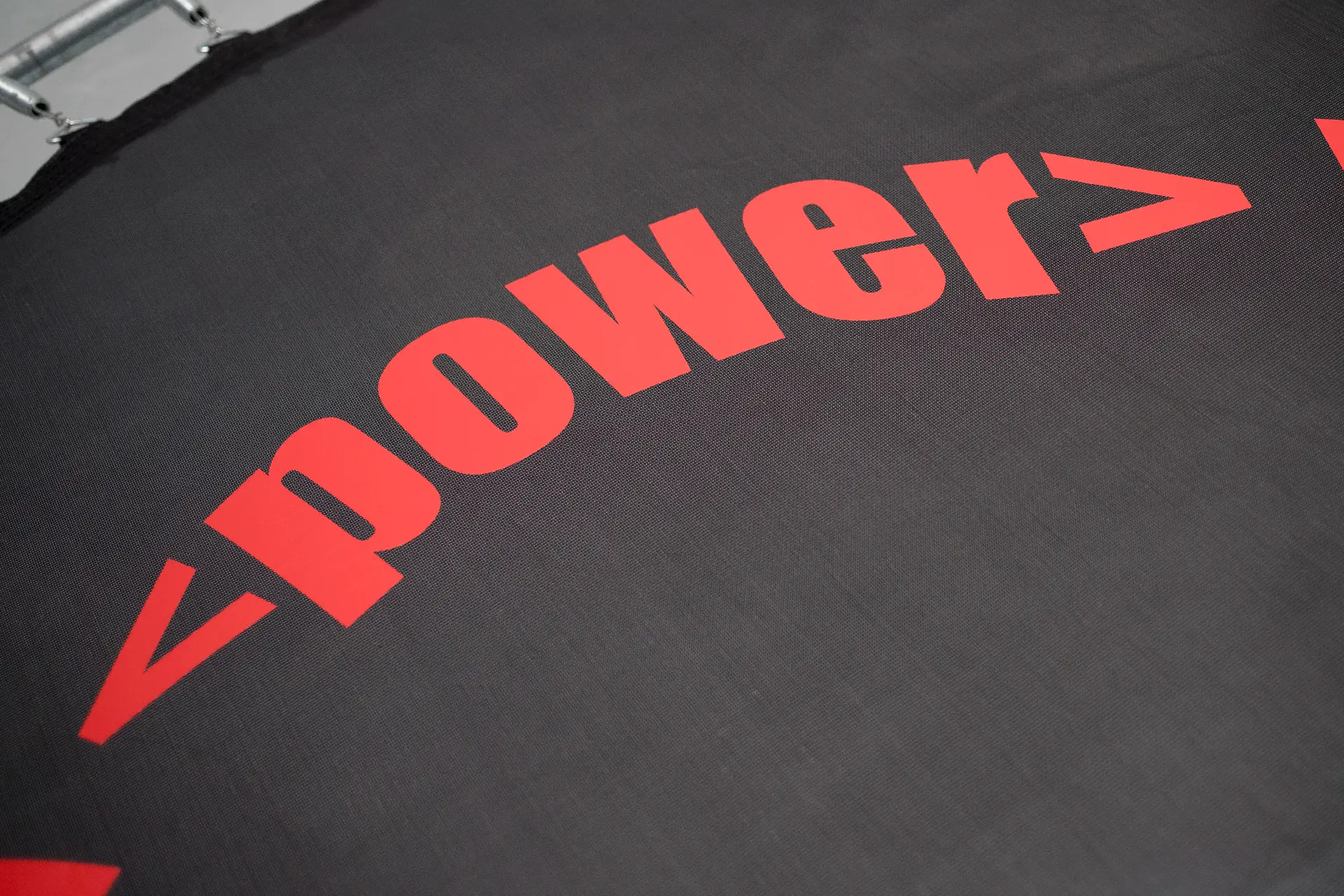
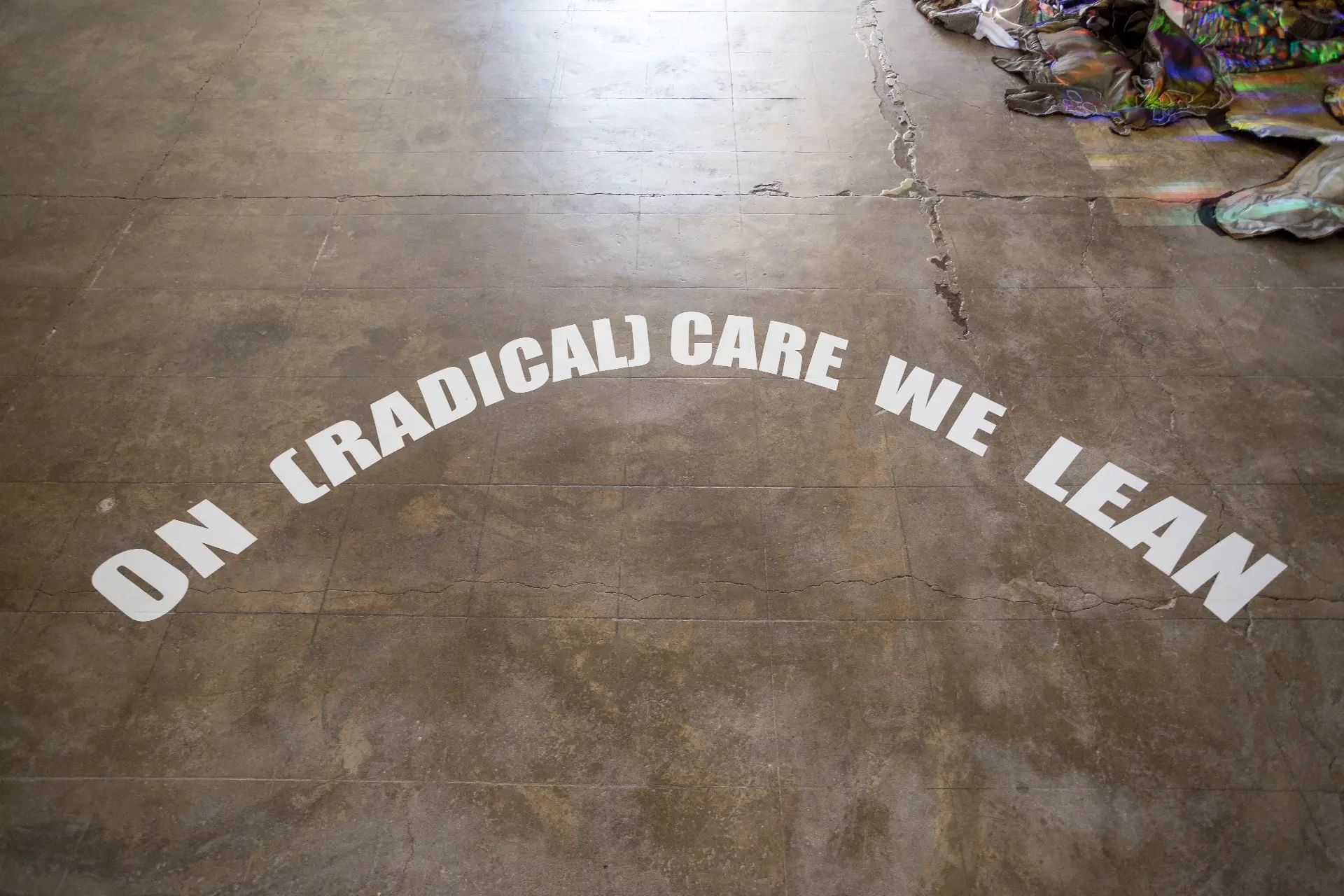
A trampoline is placed vertically within this in-between space, stretched by industrial tensioners and interrupted by a central doorway. Above it, written in bold letters, “In <power> we resist”, followed by “On (radical) care we lean” in front of the work, on the floor.
Thus, what is usually associated with play, release, and bodily movement becomes a barrier, a membrane, and a device for rethinking how one enters, perceives, and negotiates space.
Buonanno’s practice looks at space, public or private, as a site of negotiation, engaging with the conditions of said place. Often working with site-specific installations, textile materials are employed as elements capable of intensifying a specific spatial, perceptual, or political question.
In this case, the trampoline is chosen for its strong sensory persistence. Its tense elastic surface suggests pressure, rebound, impact, and resistance.
It is also connected to forms of sensory self-regulation, often used by children, including stimming, where movement and force become ways of processing the body’s relation to the surrounding world.
The installation therefore does not simply occupy a threshold; it exposes the threshold as a non-neutral space, shaped by rules, expectations, access, and exclusion.
Furthermore, the writing on the work emerges from Buonanno’s research into protest banners and workers’ demonstrations in Prato’s textile district.
Slogans, in their practice, are not decorative or symbolic additions, but direct forms of address. They come from reading, listening, and observing the political conditions around them.
The two slogans create a dialogue between resistance and support, force and vulnerability, collective struggle and mutual care. In Prato, struggles around migrant labour, unionisation, and the demand for basic working rights become part of the work’s understanding of power.
Power is not presented only as domination, as the force of the employer, the institution, or the system; it is also the force that appears when bodies gather, resist, care for one another, and reclaim visibility.
This tension is made visible through the trampoline itself: a material structure that absorbs pressure, holds bodies, and resists force, while the floor-based slogan suggests the forms of care and solidarity on which resistance must also lean.
Radical Power brings the exhibition’s questions into a physical and spatial register. If the show reflects on the structures that support, shape, and constrain artistic production, Buonanno’s installation turns those structures into something that must be encountered bodily.
The work stages a passage through tension: between care and control, protection and pressure, the individual and the collective, the residency as a sheltered space and the social realities that continue outside it.
To cross the threshold is to move through a system already under strain. The work reflects on how much pressure a body, a material, a space, or a community can absorb before it transforms that pressure into resistance.
//CREDITS
Sound and reading performance in collaboration with Muiredach O’Riain